

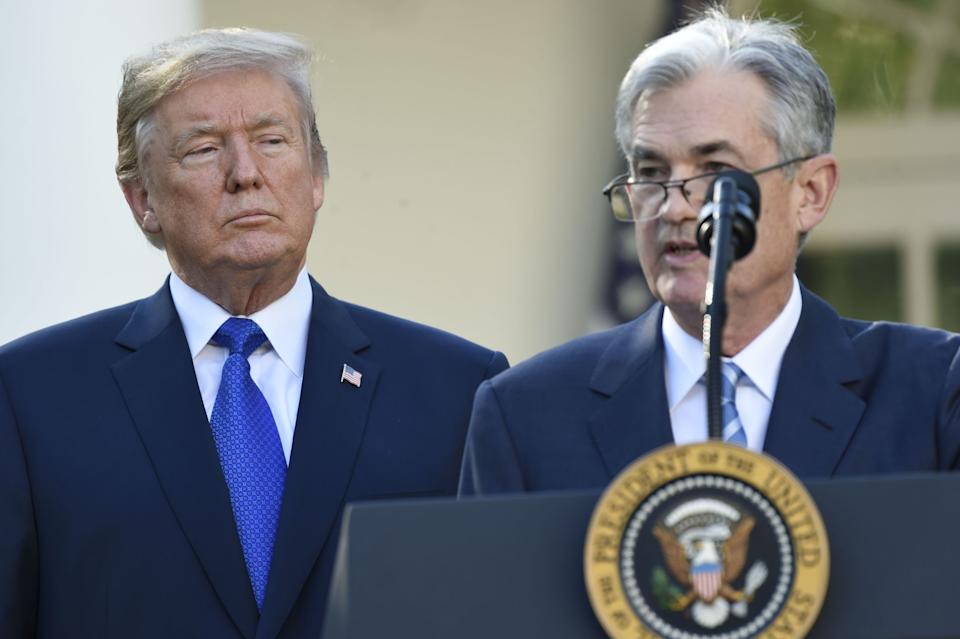
America’s path out of $38 trillion national debt crisis likely involves pushing up inflation and ‘eroding Fed independence,’ says JPMorgan Private Bank.
While optimistic economists argue that America can grow its way out of a debt crisis, pessimists believe the real outcome will be somewhat less popular.
Business leaders, policymakers, and investors are growing increasingly concerned by the United States’s borrowing burden, currently sitting at $38.15 trillion. The worry isn’t necessarily the size of this debt, but rather America’s debt-to-GDP ratio—and hence, its ability to convince investors that it can reliably pay back that debt. It currently stands at about 120%.
To reduce that ratio requires either GDP to increase or scaling down the debt. On the latter end, this could include cutting public spending. This was already tried by the Trump administration, with the Department of Government Efficiency (DOGE) under Elon Musk claiming to have saved $214 billion.
While those savings were drastically lower than promises made by the Tesla CEO when DOGE was first formed, and they’re a drop in the ocean of the bigger U.S. deficit picture, it does reveal the renewed focus Washington is giving to debt.
This will be a prevailing theme for investors as well, according to JPMorgan Private Bank’s outlook for 2026. (The ban serves high net worth individuals.) The report, released today, says there are three issues investors need to bear in mind: Position for the AI revolution, get comfortable with fragmentation over globalization, and prepare for a structural shift in inflation.
It is this final part, a shift in inflation, which is where the debt question comes in.
JPMorgan writes: “Some market participants warn of a coming U.S. debt crisis. In the most extreme scenario, the Treasury holds an auction and buyers are nowhere to be found. We see a more subtle risk. In this scenario, instead of a sudden spike in yields, policymakers make a deliberate shift. They tolerate stronger growth and higher inflation, allowing real interest rates to fall and the debt burden to shrink over time.”
A key snag in the plan is the toleration of higher inflation: After all, this is the remit of the Federal Reserve’s Open Market Committee (FOMC), which is tasked with keeping inflation as close to 2% as possible. While the FOMC could be swayed to take a broader view than its dual mandate of stable prices and maximum employment if a national debt crisis impacted these factors, it may need more than arguments from politicians.
Then, of course, there are tariffs, which raked in a record $31 billion in August. Debate is rife about whether U.S. consumers will end up ultimately paying for the policy, or whether the cost will be “eaten” by foreign firms. With a lack of data during the government shutdown, there’s no way to see whether that inflationary pressure is being passed through yet.
The good news is, “at the moment, investors seem comfortable financing the U.S. government’s debt,” the outlook report added. At the time of writing, U.S. 30-year treasury yields sit at 4.7%, similar to where they began 2025, suggesting buyers of American borrowing are not yet demanding higher premiums to be enticed.
Source: Financeyahoo


