

China just found America’s achilles heel, and it’s buried underground.
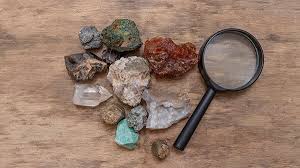
China has just found the United States’ Achilles heel, and it isn’t in Washington, Silicon Valley or the Pentagon. It’s deep underground, in the form of seventeen metallic elements the world calls rare earths. Beijing has weaponised its dominance over these minerals to squeeze America where it hurts most: defence. Missiles, jets, submarines, satellites: all depend on Chinese processed rare earths. Beijing calls it “national security”. Washington calls it “economic warfare”. The truth? It’s both. Because in this war for global supremacy, whoever controls rare earths controls the battlefield. The question now is: can the world’s mightiest military fight back when its weapons depend on China’s minerals?
The context is stark. China controls roughly 90% of the world’s rare earth processing, and President Trump’s new trade war has just triggered a strategic counterstrike. In response to his 25 to 50% tariffs on Chinese tech, Beijing has restricted exports of gallium, germanium and other minerals vital for semiconductors, radar and missile systems. The move exposes a hidden truth: America’s F-35s, Tomahawk missiles and Predator drones all run on Chinese-processed elements. Beijing hasn’t fired a single shot, yet it’s hit the Pentagon where it’s most exposed. Is this the new face of 21st century warfare: minerals as missiles?
Rare earths are the invisible fuel of modern power. They make magnets for stealth jets, guidance systems for missiles and sensors for nuclear submarines. Without them, advanced militaries go blind, deaf and immobile. The F-35 alone needs over 900 pounds of these elements. A single Virginia-class submarine consumes nearly 9,000 pounds. These aren’t luxury commodities: they’re the bones of military might. And China doesn’t just mine them; it refines them. Over 90% of global processing happens on Chinese soil.
The United States has one mine, Mountain Pass, Californi,a but even its raw ore is shipped to China for separation. It’s a geopolitical irony: America digs the dirt, but Beijing makes the magic. Decades of ignoring industrial policy and outsourcing environmental risks have left Washington trapped in a supply chain it can’t escape. Beijing saw the vulnerability. Now it’s using it, deliberately, surgically and without mercy.
When Trump slapped massive tariffs on Chinese electric vehicles, batteries and AI firms, Beijing didn’t just retaliate with words—it retaliated with minerals. In October 2025, the Chinese Commerce Ministry issued Announcement No. 62, cutting off strategic minerals like gallium and germanium under the guise of “sustainability”. But analysts see the truth: this was a geopolitical bullet. These elements are essential to radar systems, semiconductor chips and missile guidance technology. In short, to the Pentagon’s entire operating system.
Chinese state media hailed it as a defence of “technological sovereignty”, but behind the rhetoric lies a message aimed squarely at Washington: You can sanction chips; we can sanction the materials that make them. In the global chessboard of power, the US moved first—but Beijing just flipped the board. Now, every American defence contractor from Lockheed to Raytheon faces the chilling reality that their next missile might depend on Beijing’s approval stamp.
Washington’s military-industrial complex, worth trillions, now hinges on materials mined and processed by its top rival. Even a short delay in rare earth exports could ripple through production lines for jets and submarines. The mighty Pentagon—whose budget eclipses the next ten militaries combined—now faces a supply chain chokehold from a single ministry in Beijing. The balance of power isn’t shifting on the battlefield—it’s shifting in the refineries.
This isn’t the first time Beijing has used minerals as weapons. In 2010, China suspended rare earth shipments to Japan during a maritime dispute—and Tokyo buckled under the pressure. Fast-forward to 2025, and Beijing has perfected that tactic on a superpower scale. It’s no longer about fishing rights or disputed islands; it’s about shaping the global order. By controlling the world’s rare earth valves, China can now decide which economies—and armies—can function.
Source: Indiatoday


