

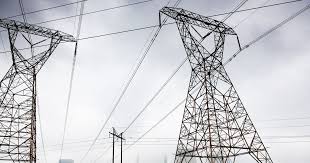
Adani, Chinese firms join race for South Africa’s $25 billion grid expansion.
South Africa’s 440 billion rand ($25 billion) transmission grid expansion plan has drawn strong global interest, from Indian billionaire Gautam Adani’s energy company to major Chinese state-owned power firms.
This marks a pivotal moment in the nation’s effort to stabilise its electricity supply and unlock its renewable potential.
Launched in December, the Independent Transmission Projects (ITP) program invites private developers to help construct 14,000 kilometres (8,700 miles) of new power lines
The expansion will connect an ambitious pipeline of 34 gigawatts of wind and 25 gigawatts of solar capacity planned over the next 14 years, addressing the strain on South Africa’s ageing and congested grid.
According to the Independent Power Producer Office, 17 companies and consortia submitted bids during the pre-qualification round.
They include Adani Power’s Middle East arm, China Southern Power Grid International, State Grid International Development Co., France’s EDF Power Solutions, and local players such as SOLA Group and Mulilo Renewable Energy Ltd. The evaluation phase is expected to conclude by November.
Upgrading the grid forms the backbone of South Africa’s evolving energy transition strategy.
The government plans to gradually retire its coal-fired power stations, which still supply most of the nation’s electricity, while ramping up investments in gas, renewables, and nuclear energy, according to its latest energy blueprint.
The first phase of South Africa’s ITP will involve the construction of 1,164 kilometres of transmission lines, adding more than 3,000 megawatts of new capacity, Electricity Minister Kgosientsho Ramokgopa said in April.
The project is expected to face minimal land dispute challenges, which have historically delayed infrastructure builds.
The Development Bank of Southern Africa (DBSA) noted that similar public-private grid partnerships have succeeded in countries such as India, Brazil, Peru, and Chile, where private developers take on construction and financing risks in exchange for long-term ownership or operating rights.
Source: Africabusinessinsider


